The Problem
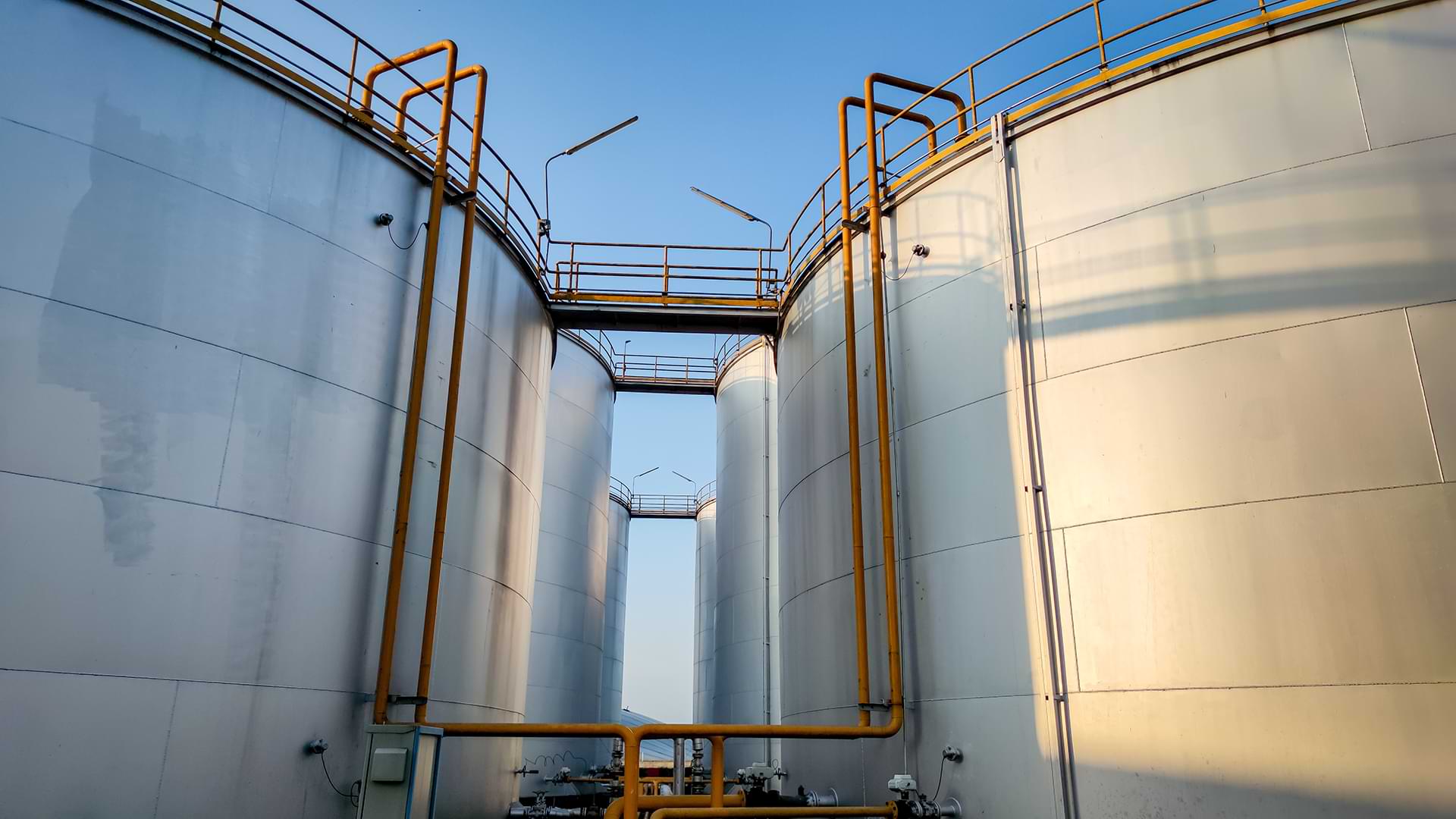
An Eagle Ford Shale operator aggregates production from multiple fields to a Central Delivery Point (CDP)
consisting of three 50,000-barrel oil storage tanks and associated process equipment. New horizontal
wells from one particular area served by the facility’s gathering system produce fluids with elevated
hydrogen sulfide levels, leading to increasing H₂S concentrations at the CDP inlet as new wells were
brought online.
The primary concerns are preventing H₂S vapors from flashing into the oil tank headspace and exceeding
the oil sales pipeline specification limit of 4 ppm. To manage H₂S, the operator was continuously injecting
an amine-based, high-pH scavenger. However, due to the chemical’s incompatibility with produced water,
the injection point was limited to a distance of 1,000 feet upstream of the oil tanks.
Despite injecting 300 gallons per day, frequent H₂S spikes measured in the tank headspace required
batch treatments of 500-700 gallons of the amine scavenger per event. At the same time, severe scale
formation was occurring in water knockout vessels and heater treaters.
The Solution
Seeking to maintain H₂S below 4 ppm and mitigate scaling – and with a broader objective of reducing
chemical expenditures – the operator turned to Imperative Chemical Partners for answers.
A root cause investigation of the scaling issues determined that the calcium-rich produced water
was negatively reacting with the high-pH amine scavenger. Water chemistry analysis confirmed
that recirculating tank bottoms through the system intensified the problem, as evidenced by
comparisons of CDP inlet water samples versus internal facility samples.
Imperative Chemical Partners proposed replacing the amine scavenger with SVW-40565, a non-triazine,
water-compatible scavenger formulated for three-phase production streams. Although dosage rates
were initially maintained at 300 GPD, SVW-40565’s lower per-gallon cost delivered an immediate 30%
savings.
Unlike the amine-based scavenger, SVW-40565 is compatible with oil, gas, and water and does not
promote scale formation. This allowed a second injection point to be installed on the main trunkline
±12 miles upstream of the CDP, where production inflow is a 50/50 mixture of oil and produced water.
The Outcomes
Upstream injection significantly extends chemical contact time for more efficient H₂S treatment.
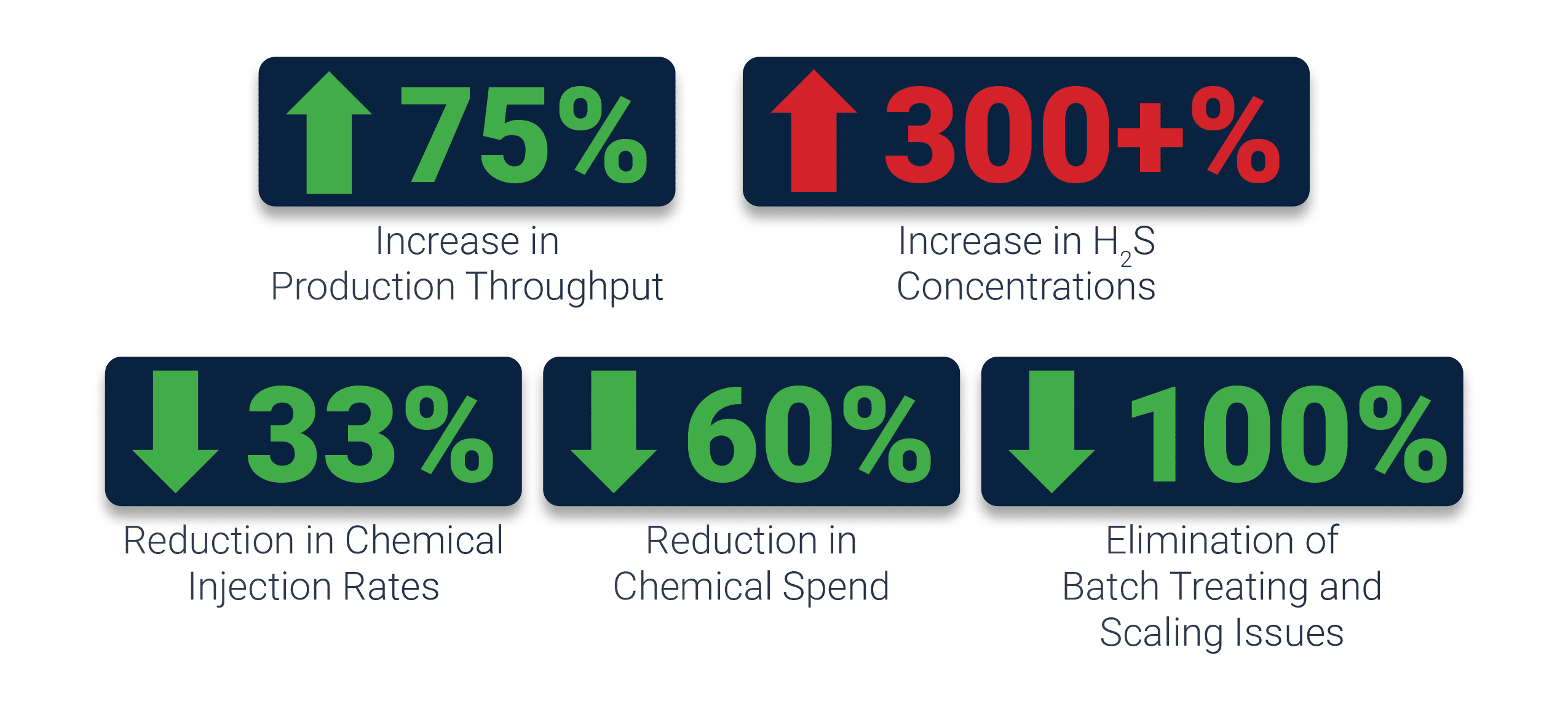
This allowed rates to eventually be lowered from 300 to 200 GPD, capturing a further ±30% cost reduction. In addition, injecting SVW-40565 upstream enables a high-H₂S leg of the gathering system to be treated prior to commingling to reduce CDP inlet H₂S concentrations while preventing scaling downstream.
Since implementing SVW-40565, no batch treatments have been required. Eliminating scale formation has decreased downtime and facility maintenance, extended equipment life, and improved overall operational stability. The bottom line is more consistent H₂S scavenging performance at significantly lower cost.
In fact, despite CDP throughput roughly doubling to 6,000 BOPD and production from new wells containing up to 15,000 ppm H₂S, the operator has realized a ±60% savings in total chemical spend, demonstrating the economic value of selecting the right chemistry and injection strategy in a highly dynamic production environment.
SVW-40565: Eagle Ford Central Delivery Point (CDP)